
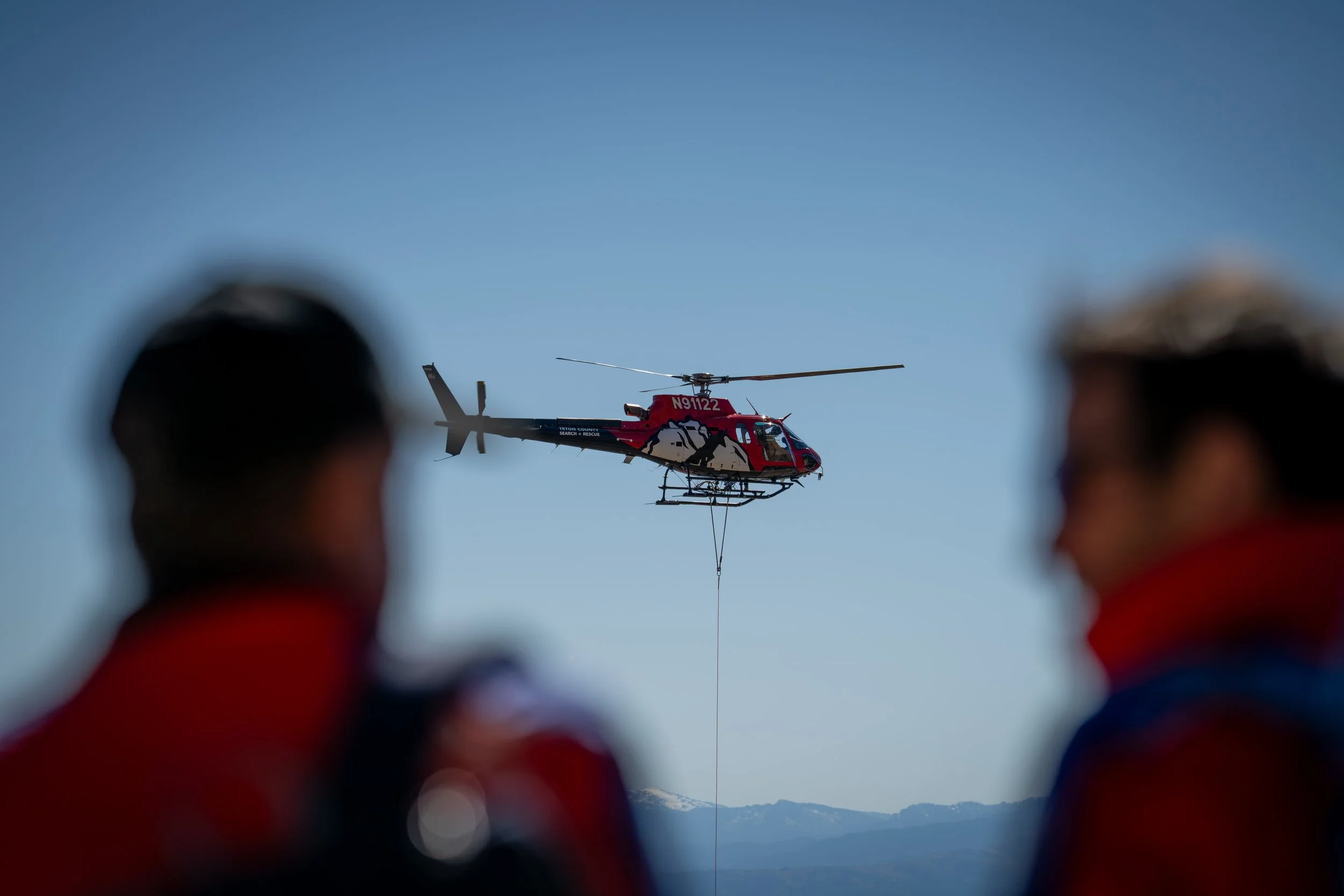
On Thursday, August 27, Teton County Search & Rescue volunteers were called out for a midnight mission.
Just before 10 p.m. on Thursday, TCSAR received an emergency call from a family member concerned that their 19-year-old son was lost in the dark after trying to hike up Cream Puff Peak, a 9,639-foot mountain in the Hoback Canyon.
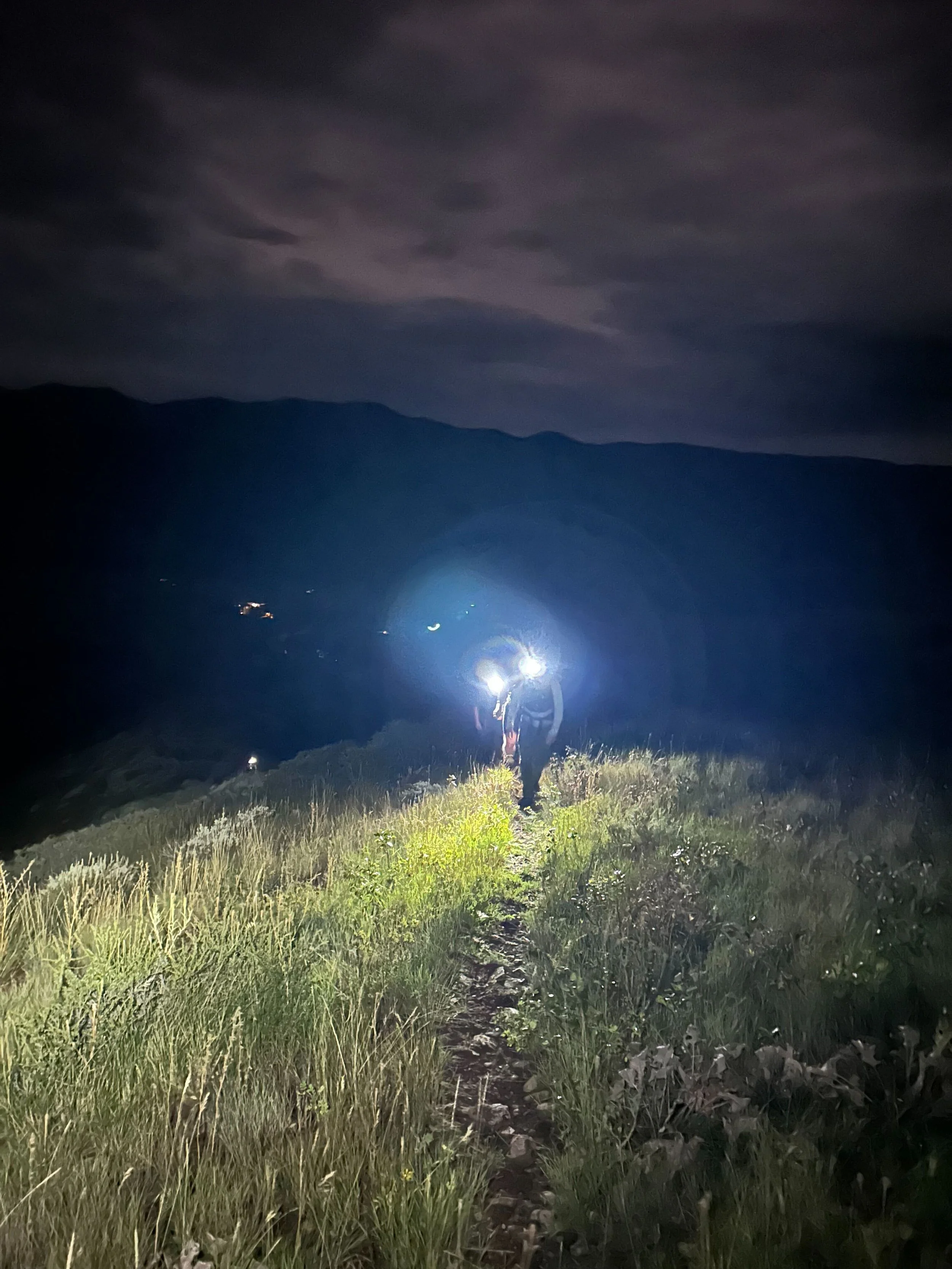
TCSAR volunteers ascend the trail of Cream Puff Peak in search of a lost hiker. Cream Puff Peak is known for a trail network that can at at times difficult to follow even in the daytime. Photo: Teton County Search & Rescue
The subject was visiting family who work in the area during the summer and had been hiking by himself when he lost the trail. The subject called his dad to say that he had been turned around and didn’t know which way to go, which prompted the family to notify emergency personnel. Eventually, the lost hiker’s phone died. He did not have a headlamp or food and had run out of water.
In response, TCSAR sent a team of five volunteers into the field. They began hiking up the trail from the Poison Creek trailhead at 12:30 a.m. The team shouted into the darkness and were able to make voice contact with the subject. However, as the team ascended the mountain the subject’s replies grew softer and intermittent. TCSAR then dispatched another two volunteers into the field at 1:45 a.m. This second team started at the same trailhead but approached off-trail up a ravine to the existing trail on a ridge.
The first team eventually found the subject, who was uninjured but cold, tired and hungry. The volunteers provided him with extra layers, food, and water before they began hiking down the trail together. They all made it back to the trailhead at 3:15 a.m., where the subject’s father picked him up for a ride home.
One takeaway from this incident is to keep a close eye on your cell phone battery life. If you see that your phone is about to die during an emergency, send a text to 911 so that first responders can get your location. That cellular ‘handshake’ will give SAR personnel your coordinates on a map, allowing them to find you even after your cell phone dies. And then, of course, stay in your same location until help arrives.