Mosquito Creek

TCSAR Responds to Injured Snowmobiler in Mosquito Creek

Jackson, Wyo. — At 11:42 a.m. on Friday, February 20, Teton County Search & Rescue was called with a report of an injured snowmobiler in the Mosquito Creek area. A 32-year-old male had sustained multiple injuries after his machine hit a stump.

A team of Jackson Hole Ski Patrollers, which included a TCSAR volunteer, was in the area doing their own training. They were able to locate the patient and began assessing his injuries. 

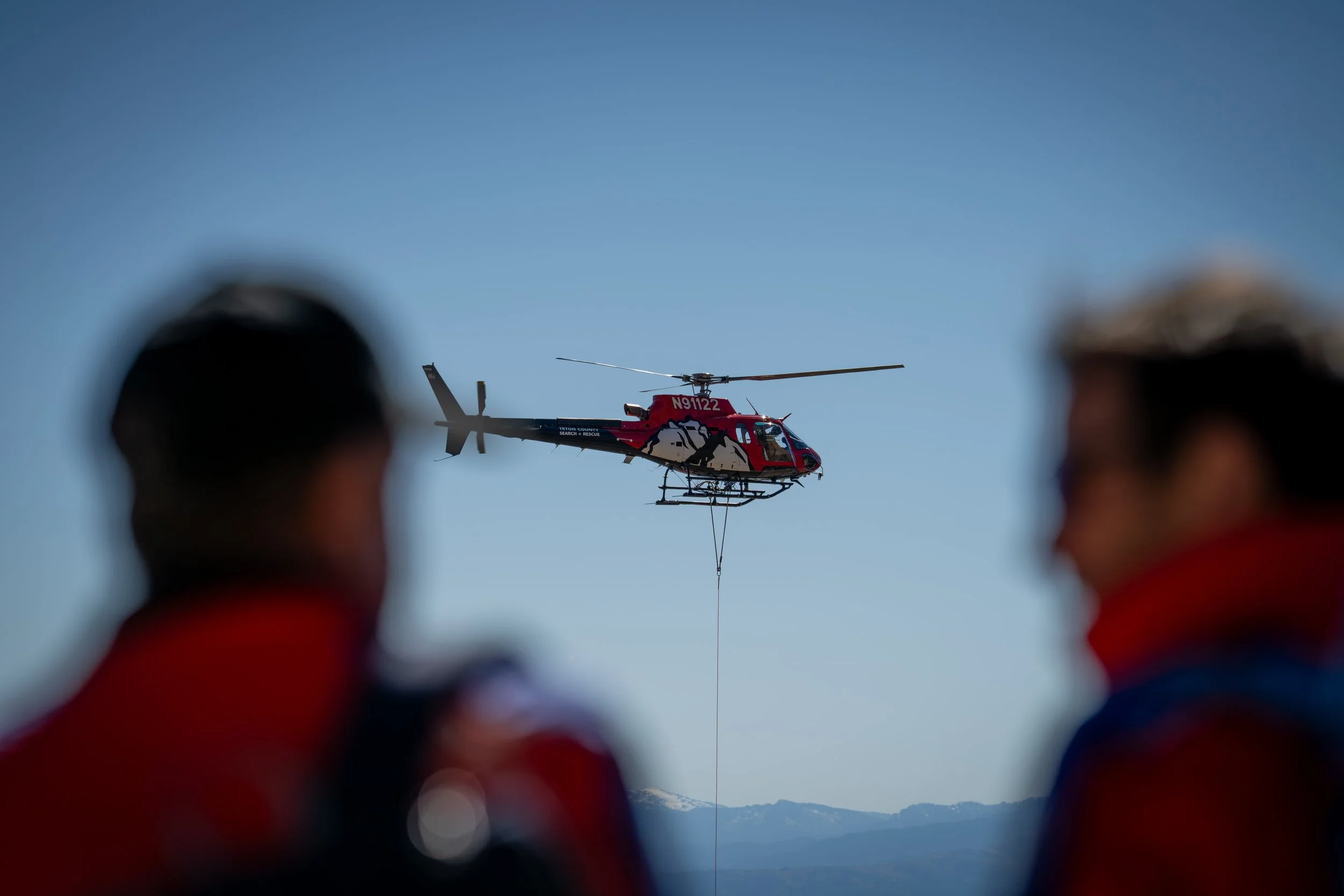
TCSAR responded with a helicopter team and sent snowmobile teams to the area as backup. The heli team was equipped with short-haul gear in case the ship could not land. Short-haul is a rescue method in which rescuers and patient can be picked up from the scene by a long rope connected to the belly of the helicopter. In this case, the pilot found a suitable place to land, and the team loaded the patient internally for a short flight to a waiting ambulance at the TCSAR headquarters in Jackson.

Start to finish, 14 SAR personnel wrapped up this rescue in around two hours.
Slow is Smooth, Smooth is Fast: How TCSAR Volunteers Rely on their Heli Training

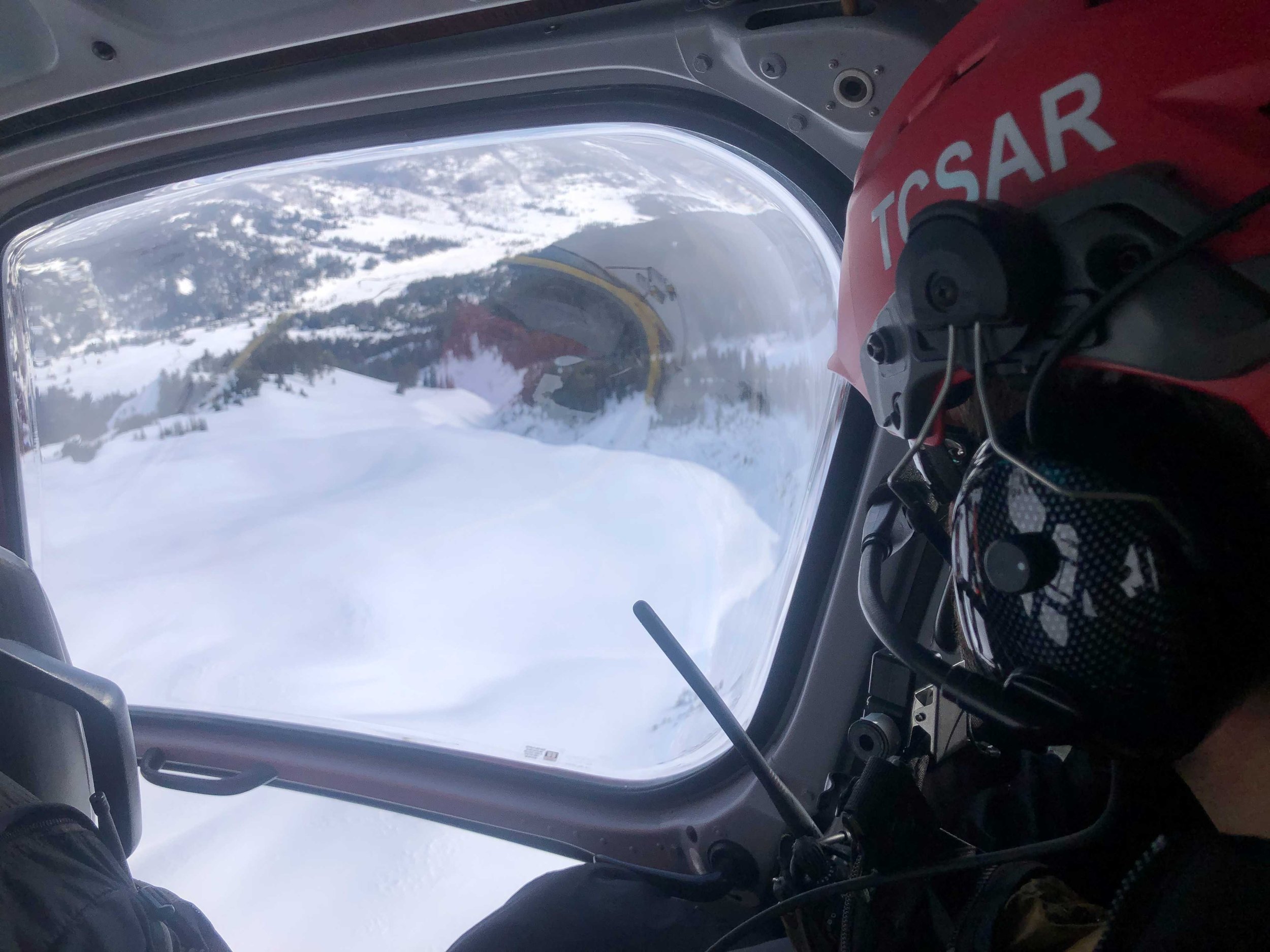
When operating around the helicopter, TCSAR volunteers follow this important mantra: Slow is smooth, smooth is fast.

“There’s a lot going on–lots of noise, wind and things move pretty fast–so it can be nice to slow things down,” says Ian Johnston, who joined the team just this past year and went through his inaugural helicopter training. “We don’t ever rush when we’re around the helicopter. Pilot Steve Wilson is as cool as a cucumber and will allow you to figure out what you need to do to complete the mission.”

Ashley Didion, another new volunteer, recalls how much her training came into play on her first heli mission.

We are about halfway to reaching our goal for providing a year's worth of training and equipment purchases for TCSAR volunteers! If you haven't donated yet, please know that all contributions are currently doubled and go directly toward TCSAR's emergency helicopter operations. Double your impact today!

"My first heli rescue happened March 13, 2021,” she says. “There were two lost skiers in the backcountry, unprepared to stay the night. It was this experience that relayed to me how strategic the team's training had been. I knew my gear, the steps to prepare for a safe flight, was prepared for communication with my helmet and radio, could enter and exit without hesitation, and knew the roles of my teammates. These skills of preparation and communication were already seeded and well rooted."

About 45 minutes before sundown, the team spotted the lost skiers from the air, landed nearby and flew them out of the backcountry so they might ski another day.

"I was boggled by how small they were," Didion says. "There is a skill in sighting a person from the air."

She stresses how much emphasis TCSAR places on collective team humility and understanding.

"There is no pride or shaming on this team, especially around the heli," Didion says. "We put ourselves at risk to save others, and this risk is never forgotten, it is never misunderstood. The pilot always says how many 'souls' he has on board. We put our souls into our training and rescues, and I love how it is never unrecognized by all on the team."

Thank you to everyone who has already donated during this Heli-Yes! campaign. Your contributions truly make a difference in people's lives.