
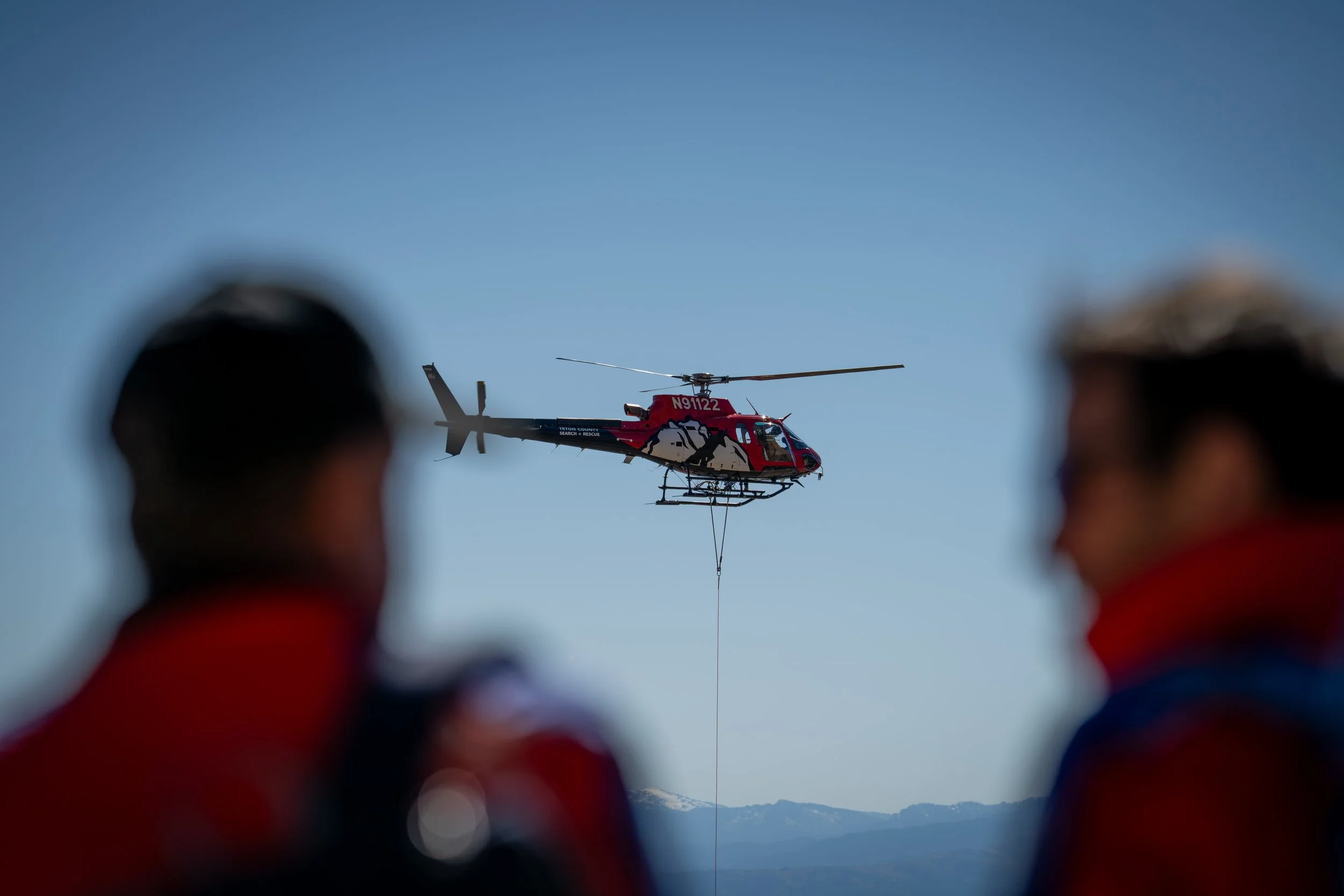
Wheeled Litter

TCSAR Uses Wheeled Litter to Evac Injured Backpacker

At 12:23 p.m. on Monday, August 24, Teton County Search & Rescue received an alert regarding an injured backpacker on the Green Mountain Trail on the west side of the Tetons.

The backpacker, a woman in her 70s, sustained injuries when she tripped and fell while descending about two miles from the trailhead at North Leigh Canyon.
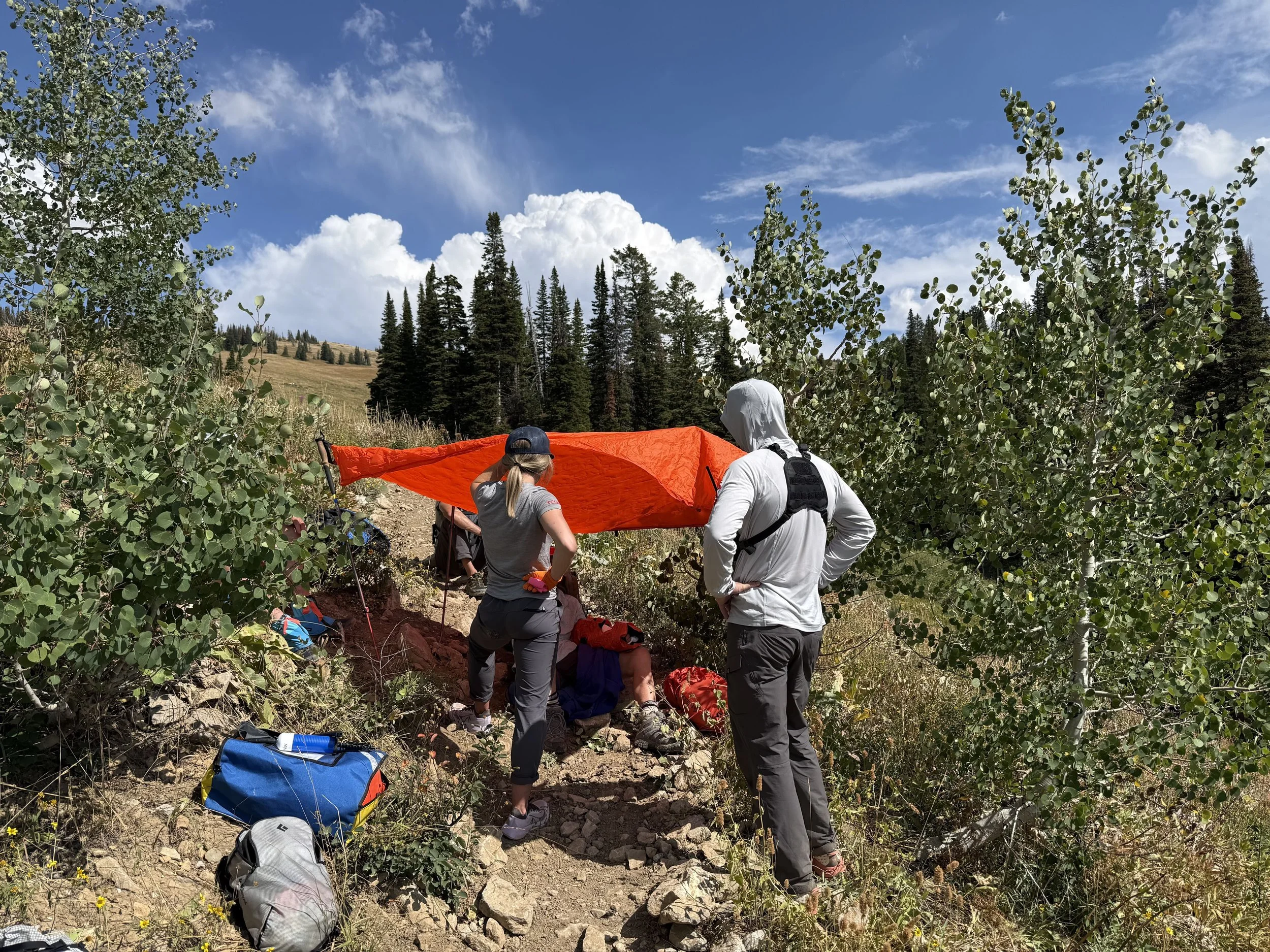
TCSAR volunteers assist an injured backpacker on the Green Mountain Trail on Monday, August 24, 2026. Photo: Teton County Search & Rescue

TCSAR sent two teams in response. Three volunteers who live in Teton Valley gathered gear from TCSAR’s rescue cache in Alta and reported directly to the trailhead to approach the patient on foot. A second team of six volunteers from Jackson drove to the trailhead in a SAR vehicle and ascended the trail on foot while hauling more supplies along with a wheeled litter.
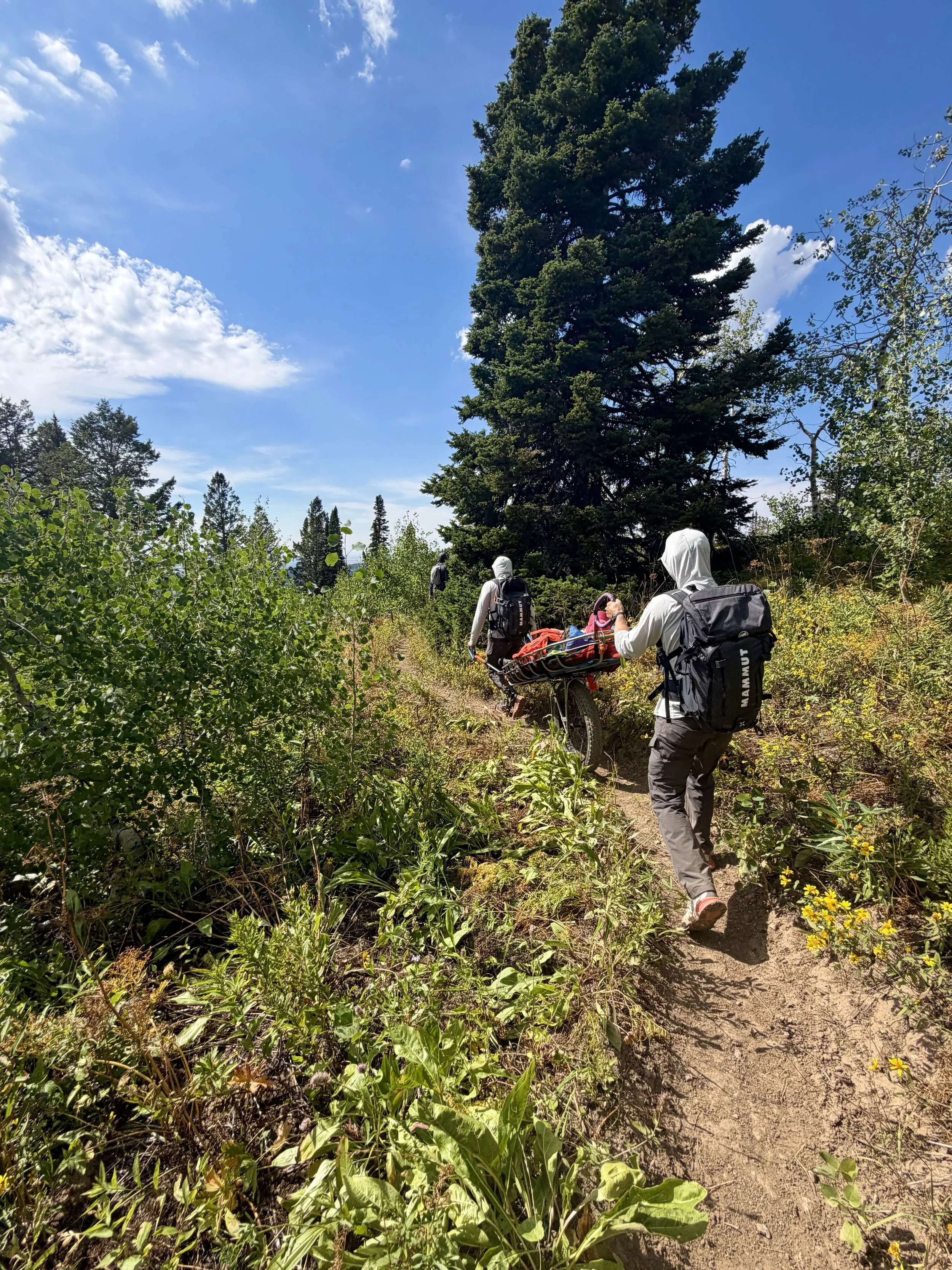
Photo: Teton County Search & Rescue

A wheeled litter is a portable rescue tool that allows rescuers to package a patient in a body-length rigid stretcher with elevated sides that sits on a single fat mountain bike tire. The system has disc brakes that help the volunteers guide the litter over rough terrain.
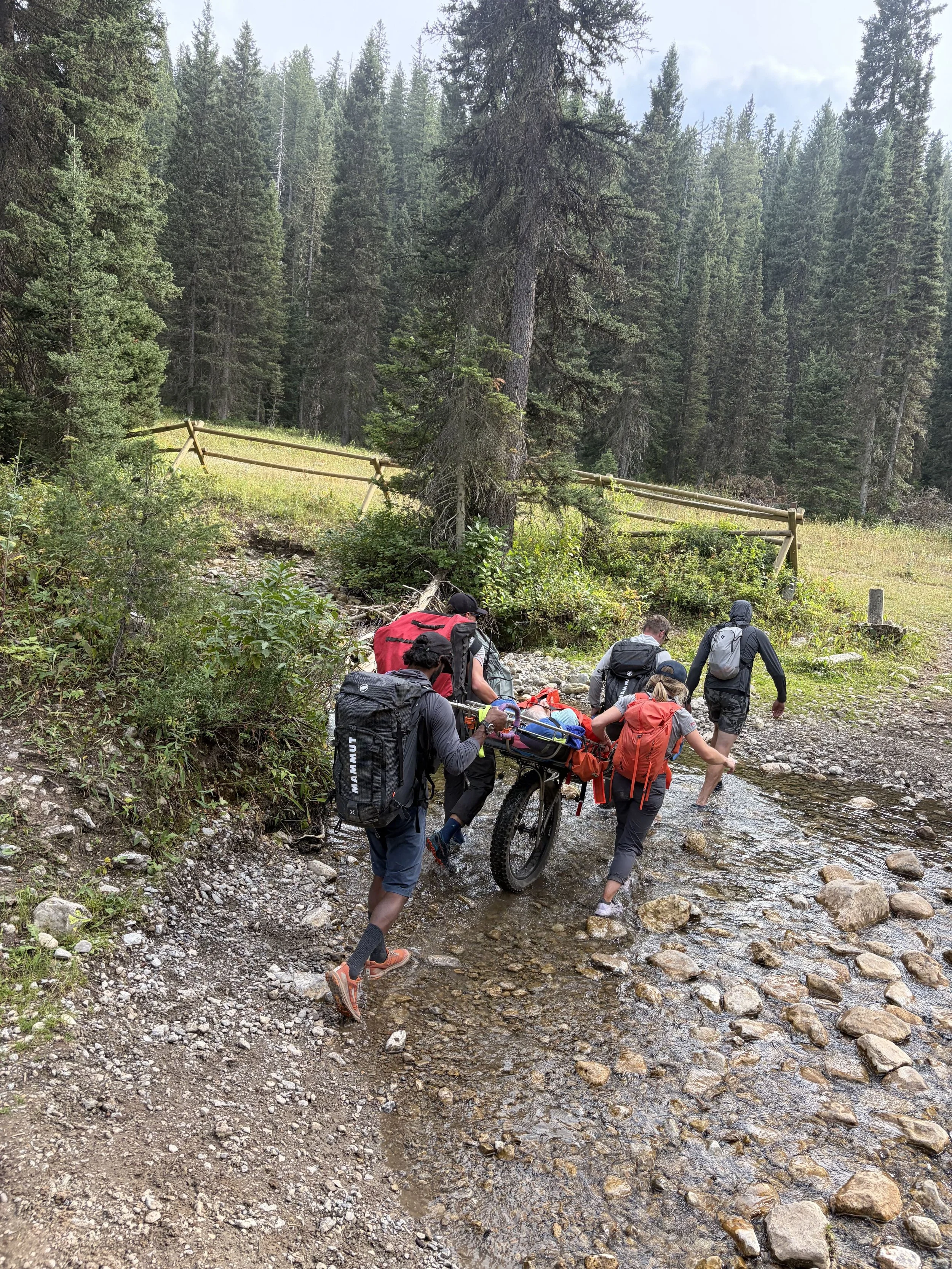
Photo: Teton County Search & Rescue

Once on scene, the volunteers assessed the patient’s injuries and packaged her for transport in the wheeled litter. They then transported her down the trail to a waiting ambulance from Teton County Idaho Fire & Rescue near the trailhead. Afterwards, the volunteers packed up, readied the gear for the next mission, and headed home.

TCSAR Responds to Distressed Hunter in Horse Creek

At 7:32 p.m. on Friday, September 26, Teton County Dispatch received an emergency alert for a hunter having a medical issue in the North Fork of Horse Creek, a remote area that lies to the southeast of the Cache Creek drainage. The alert regarded a 66-year-old man from Oregon who was reported to be in severe distress. 

The man was in a guided group of elk hunters. After dusk, the group had been hiking down a steep trail back to camp when the man could go no further.

Teton County Search & Rescue responded with two ground teams, each taking side-by-side vehicles up Cache Creek. When the vehicles could go no further, two volunteers continued on bikes. When the bikes could go no further, they continued on foot until they reached the patient about a mile past the divide between Cache Creek and Horse Creek. The second ground team came in on foot carrying the wheeled litter.

As the team treated the patient, they considered going down into Horse Creek, but opted to go back up to Cache Creek toward their vehicles and a potential landing site for an emergency helicopter. The team placed a request for an air ambulance out of Riverton but it was called off due to darkness and challenging terrain (the TCSAR ship was not available because it cannot fly at night).

The team then packaged the patient in the wheeled litter and transported him back up the divide and into Cache Creek. From there, they placed the man in one of the side-by-sides and drove him to the trailhead and waiting ambulance from Jackson Hole Fire/EMS.

The volunteers returned to TCSAR HQ at 2:30 a.m., and prepped the equipment for the next mission.

TCSAR Rescues Injured Hiker from Teton Canyon

On Thursday evening, September 4, a 28-year-old woman from Washington became injured while hiking down from Table Mountain. Along with her three companions, the injured party initially tried to hike out on her own, but she then sustained another injury in the process. Recognizing their need for rescue, the group put in a 911 call at 8:45 p.m.

Teton County Search & Rescue members who live on the westside of the Tetons responded, while additional volunteers from Jackson came in as support from over Teton Pass. The westside team gathered the necessary gear from the Alta cache—a wheeled litter and medical equipment—and hiked about 2.5 miles up the North Teton trail in Teton Canyon. They reached the patient just after 11 p.m, with the support team arriving about 10 minutes later. 

The volunteers placed the patient in the wheeled litter and transported her down the rocky trail, arriving at the trailhead at 1:15 a.m. From there, the patient elected to self-transport to higher medical care.

All volunteers were reported out of the field, with equipment prepped for the next mission, at 2:30 a.m.